
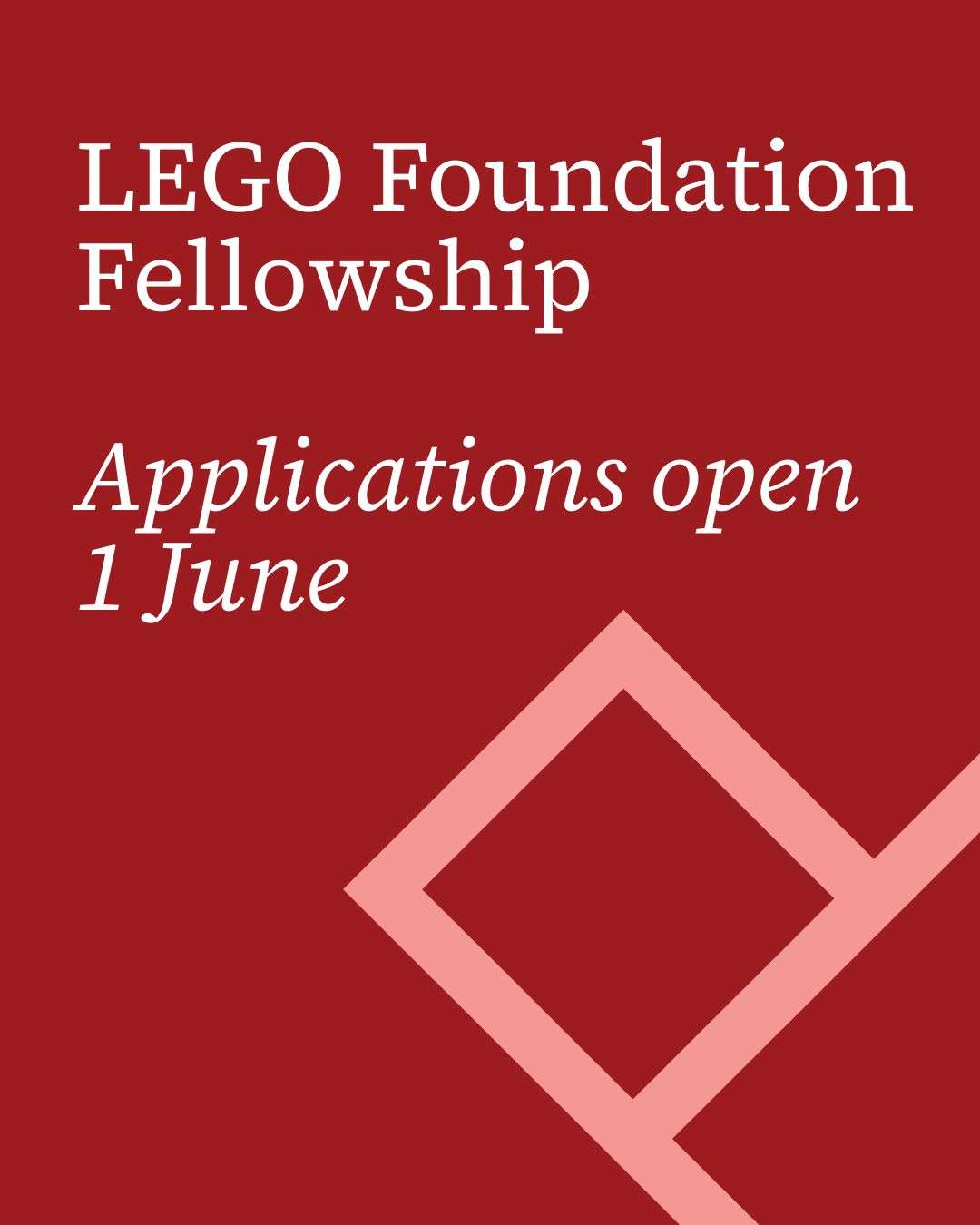
LEGO Foundation Fellowship 2027: $300,000 Global Research Fellowship for Early- and Mid-Career Scholars Working on Children’s Thriving @and Mid-Career Scholars Working on Children’s Thriving
Applications are now open for the LEGO Foundation Fellowship 2027, a prestigious global research fellowship supporting early- and mid-career researchers whose work advances understanding of how children thrive across diverse contexts worldwide.
Administered by the Social Science Research Council (SSRC) in partnership with the LEGO Foundation, this highly competitive fellowship provides flexible funding of USD 300,000 over three years to scholars conducting ambitious, rigorous, and practically relevant research related to children’s wellbeing, development, learning, inclusion, resilience, and thriving.
The fellowship brings together researchers from multiple disciplines including education, psychology, child development, sociology, neuroscience, public health, data science, humanitarian studies, disability studies, implementation science, economics, and human-computer interaction.
Researchers selected for the fellowship will not only receive substantial financial support but will also become part of a global interdisciplinary cohort dedicated to generating evidence that informs real-world action for children.
Applications must be submitted by July 31, 2026.
About the LEGO Foundation Fellowship
The LEGO Foundation Fellowship is a global initiative created to support researchers whose work can strengthen understanding of how children learn, grow, develop, and thrive in complex and changing environments.
The fellowship reflects the LEGO Foundation’s long-standing commitment to improving children’s lives worldwide through education, creativity, learning through play, wellbeing, and inclusive development.
The programme coincides with the LEGO Foundation’s 40th anniversary and responds to urgent global challenges affecting children today, including:
- Humanitarian crises and conflict
- Displacement and instability
- Mental health challenges
- Educational inequalities
- Neurodivergence and inclusion
- The rapid expansion of artificial intelligence
- Social disconnection and reduced learning engagement
The fellowship is designed to empower researchers who are producing evidence capable of shaping policy, practice, and systems that better support children globally.
Fellowship Funding and Benefits
Selected fellows will receive extensive support over a three-year period.
Fellowship Benefits Include:
1. USD 300,000 Flexible Research Funding
Each fellow receives:
- USD 300,000 over three years
- Funding inclusive of 15% indirect costs
- Institution-administered funding support
The fellowship funding can be used for:
- Research personnel
- Professional travel
- Equipment
- Data collection
- Dissemination activities
- Trainee support
- Research-related operational costs
- IRB-related costs
- Fellowship meeting travel expenses
2. Global Fellowship Community
Fellows join an international interdisciplinary network of researchers focused on children’s thriving.
Participants gain:
- Global collaboration opportunities
- Research exchange platforms
- Peer learning experiences
- Interdisciplinary dialogue
- Networking with policy and practice audiences
3. Annual Convenings and Cohort Activities
The fellowship includes:
- Annual meetings
- Virtual cohort sessions
- Research-sharing opportunities
- Engagement with practitioners and policymakers
4. International Visibility
Fellows receive:
- Recognition within the LEGO Foundation network
- Media visibility opportunities
- Dissemination support for research outputs
5. Long-Term Career Advancement
The programme supports researchers in:
- Strengthening leadership capacity
- Advancing impactful research agendas
- Translating evidence into practice
- Building interdisciplinary partnerships
Research Themes for the Fellowship
Applicants must align their proposed research with one or more of the fellowship’s three core themes.
Theme 1: The Youngest Children in Crisis and Conflict Settings
This theme focuses on children from birth to age eight living in crisis, displacement, or humanitarian settings.
Research areas include:
Mechanisms of Resilience and Pathways to Thriving
Studies exploring how children continue to develop and learn despite adversity.
Strengthening Caregiving and Family Environments
Research on parenting, caregiving, and family systems supporting child development.
Scaling and Sustaining Effective Interventions
Evidence on how child development and mental health interventions can be expanded and sustained.
Translating Evidence into Practice
Research examining how evidence-based interventions are adopted and implemented in humanitarian settings.
The programme welcomes studies involving:
- Refugee children
- Internally displaced children
- Children in humanitarian emergencies
- Children in recovery contexts
- Vulnerable host community children
Theme 2: Inclusion and Wellbeing of Neurodivergent Children
This theme focuses especially on autism and ADHD.
Research may explore:
Support Before Diagnosis
How neurodivergent children can receive support before formal assessment or diagnosis.
Strengthening Family Environments
The role of home routines, caregiving, and family wellbeing.
Inclusive Learning Environments
How education systems and classroom practices can better support neurodivergent learners.
Transitions and Continuity of Support
Research on maintaining support during educational and developmental transitions.
Enabling Tools
Evidence on how digital technologies reduce barriers to communication, participation, and learning.
Theme 3: Children’s Learning and Development in an AI-Enabled World
This theme explores how artificial intelligence is reshaping children’s experiences and development.
Research topics include:
AI and Adult-Child Connection
Understanding how AI influences relationships between children and caregivers.
AI and Social-Emotional Development
Research on how AI affects emotional wellbeing, social interaction, and help-seeking behaviors.
AI and Productive Struggle in Learning
Studies examining AI’s effect on persistence, engagement, and motivation.
Differential Effects of AI
Evidence on whether AI reduces or deepens educational inequalities.
Is Play Required in the Research Proposal?
No.
Applicants may include play where relevant, but it is not mandatory and is not a condition for eligibility.
Who Can Apply?
The fellowship is open to early- and mid-career researchers worldwide.
Applicants Must:
- Hold a PhD or equivalent research doctorate by July 31, 2026
- Have received their PhD no earlier than January 1, 2016
- Be employed by a university or research institute
- Submit an individual application
- Propose research aligned with at least one fellowship theme
- Have institutional capacity to administer the grant
The programme also recognizes documented career breaks such as:
- Parental leave
- Caregiving responsibilities
- Illness
- Displacement
- Other research interruptions
Eligible Disciplines
Researchers from diverse academic backgrounds are encouraged to apply, including:
- Education
- Psychology
- Public health
- Sociology
- Neuroscience
- Economics
- Data science
- Disability studies
- Humanitarian studies
- Child development
- Human-computer interaction
- Implementation science
Countries Eligible to Apply
Applicants from all countries are welcome except those subject to EU or US sanctions.
Number of Fellowships Available
- Up to 10 fellowships
Fellowship Duration
- February 1, 2027 – December 31, 2029
Selection Criteria
Applications will be evaluated based on:
1. Alignment with Fellowship Themes
The research must clearly address one or more programme themes.
2. Clarity and Strength of Proposed Work
Applicants must demonstrate:
- Strong research questions
- Clear research gaps
- Practical relevance
3. Applicant Readiness
Reviewers will assess:
- Research accomplishments
- Leadership potential
- Research capacity
4. Feasibility and Research Quality
Applications should include:
- Sound methodology
- Ethical considerations
- Realistic timelines
- Feasible implementation plans
5. Contribution to the Field
The proposed work should contribute meaningfully to scholarship, policy, or practice.
6. Fellowship Fit
Applicants should explain why the fellowship is timely and valuable for their work.
Application Materials Required
Applicants must submit:
1. Online Application Form
2. CV or Resume
- Maximum 2 pages
3. Research Abstract
- 250-word limit
4. Personal Statement
- 500-word limit
The statement should explain:
- Motivation for studying childhood development
- Contribution to scholarly knowledge
- Leadership potential
5. Research Proposal
Maximum 5 pages covering:
- Research relevance
- Original contribution
- Methods
- Feasibility
- Work completed to date
6. Budget and Budget Justification
7. Selected Bibliography
- Maximum 2 pages
Learn more about the application details HERE.
Application Timeline
Key Dates
- Application Opens: June 1, 2026
- Application Deadline: July 31, 2026
- Fellowship Period: February 1, 2027 – December 31, 2029
Click HERE to submit your application.
How the Selection Process Works
The fellowship uses a two-stage evaluation process.
Stage One
Applications reviewed by:
- International childhood development specialists
- Multidisciplinary reviewers
Stage Two
Final selections made by:
- LEGO Foundation review committee
Applicants will be informed of results in November 2026.
Frequently Asked Questions (FAQs)
Can research address multiple themes?
Yes. Applicants may address more than one fellowship theme.
Can research teams apply?
No. The fellowship is awarded to individual researchers only.
Can existing projects receive funding?
Yes. Fellows may extend or continue existing projects.
Can fellows receive additional funding from other sources?
Yes.
Are MD or MBBS degrees accepted?
Yes. Equivalent research doctorates are eligible.
Is a budget required?
Yes. Budget submission is mandatory.
Can fellows change institutions?
Yes, with programme approval.
Does the fellowship support visas and IRB costs?
Yes. These expenses may be included in the project budget.
Why This Fellowship Is Important
The LEGO Foundation Fellowship arrives at a critical moment globally.
Children worldwide are facing:
- Conflict and displacement
- Educational disruption
- Mental health challenges
- Exclusion and inequity
- Rapid technological transformation
This fellowship invests in researchers whose work can directly influence policies, systems, and interventions that improve children’s lives.
By combining rigorous research with real-world application, the programme aims to bridge the gap between academic evidence and practical solutions for children globally.
Visit HERE to learn more about the LEGO Foundation Fellowship 2027.
Conclusion
The LEGO Foundation Fellowship 2027 is one of the most significant global research fellowships focused on children’s thriving, wellbeing, inclusion, and development.
With substantial funding, interdisciplinary collaboration, and strong institutional support, the programme offers researchers an extraordinary opportunity to advance impactful work capable of shaping the future for children worldwide.
For scholars committed to generating evidence that improves children’s lives across diverse contexts, this fellowship represents a major platform for research, leadership, and global influence.
Discover more global Fellowship and Research opportunities on OFY.
LEGO Foundation Fellowship 2027: $300,000 Global Research Fellowship for Early- and Mid-Career Scholars Working on Children’s Thriving
@and Mid-Career Scholars Working on Children’s Thriving
Location
Global
Work Mode
continent
Posted
about 6 hours ago
Beware of scams! When applying for jobs, you should NEVER have to pay anything. Learn about job scams.
Get jobs in your inbox
Join over 10,000 subscribers receiving our weekly newsletter.
You might also like

Women, Business and the Law (WBL) 2026 Course: Advancing Global Gender Equality Through Legal Reform and Data-Driven Policy
Driven Policy

UNIDO-WTCA Blue Economy Global Call 2026: Win Global Recognition, Acceleration Support, and Scale Your Ocean Innovation Worldwide
WTCA Blue Economy Global Call 2026: Win Global Recognition, Acceleration Support, and Scale Your Ocean Innovation Worldwide

SHE-CREEDS Intra-Africa Academic Mobility Scholarships 2026: Fully Funded MSc and PhD Opportunities for African Students in Climate-Responsive Agriculture, Energy-Efficient Technologies, and Digital Innovation
CREEDS Intra-Africa Academic Mobility Scholarships 2026: Fully Funded MSc and PhD Opportunities for African Students in Climate-Responsive Agriculture, Energy-Efficient Technologies, and Digital Innovation
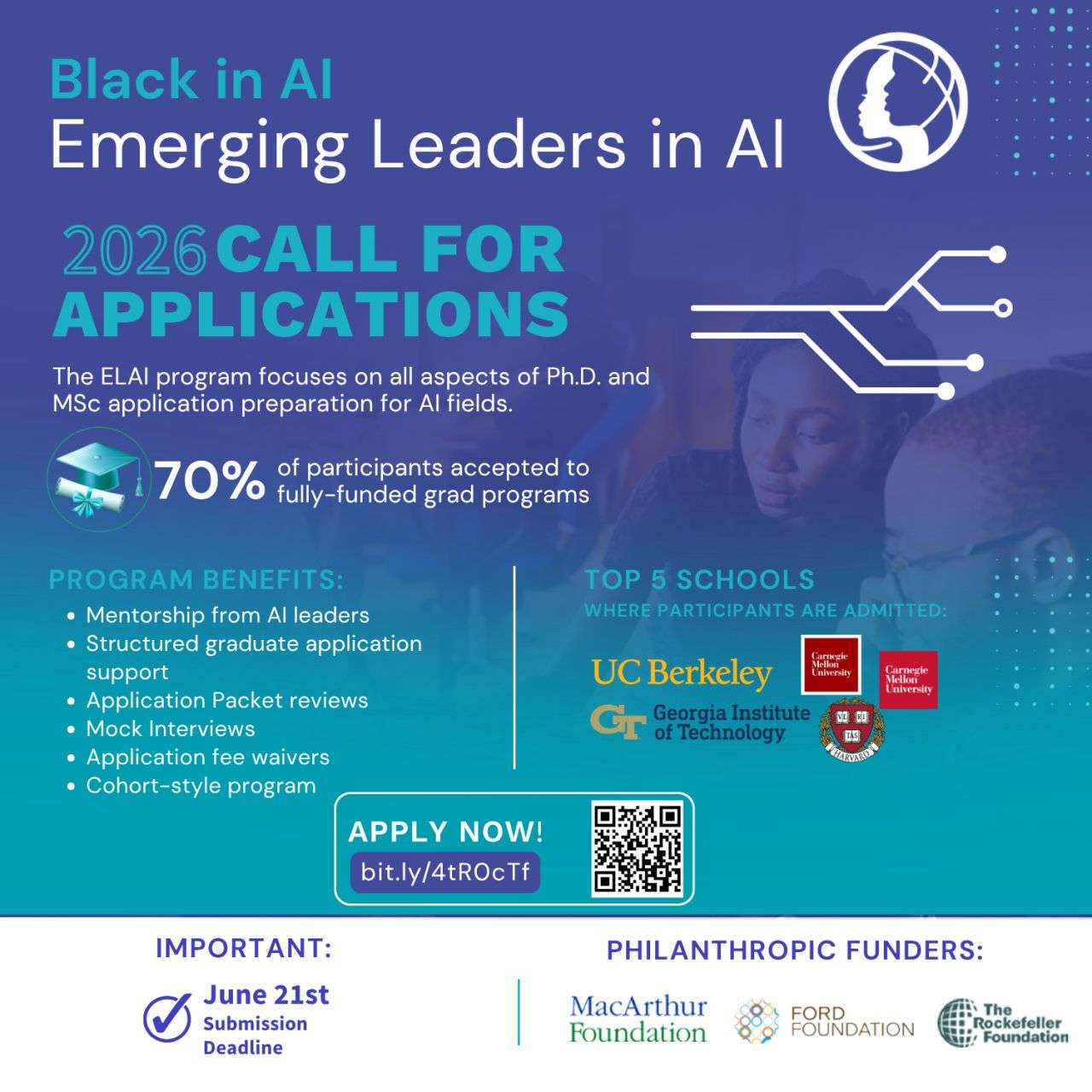
Emerging Leaders in AI: Graduate Prep Program 2026–2027 — Comprehensive Guide for Applicants
2027 — Comprehensive Guide for Applicants
Fulbright Transatlantic Diplomacy Program (TAD) for German MPP Students at the University of Erfurt
the University of Erfurt

Graduate Professional (Middle East WMD‑Free Zone)
United Nations Institute for Disarmament Research