
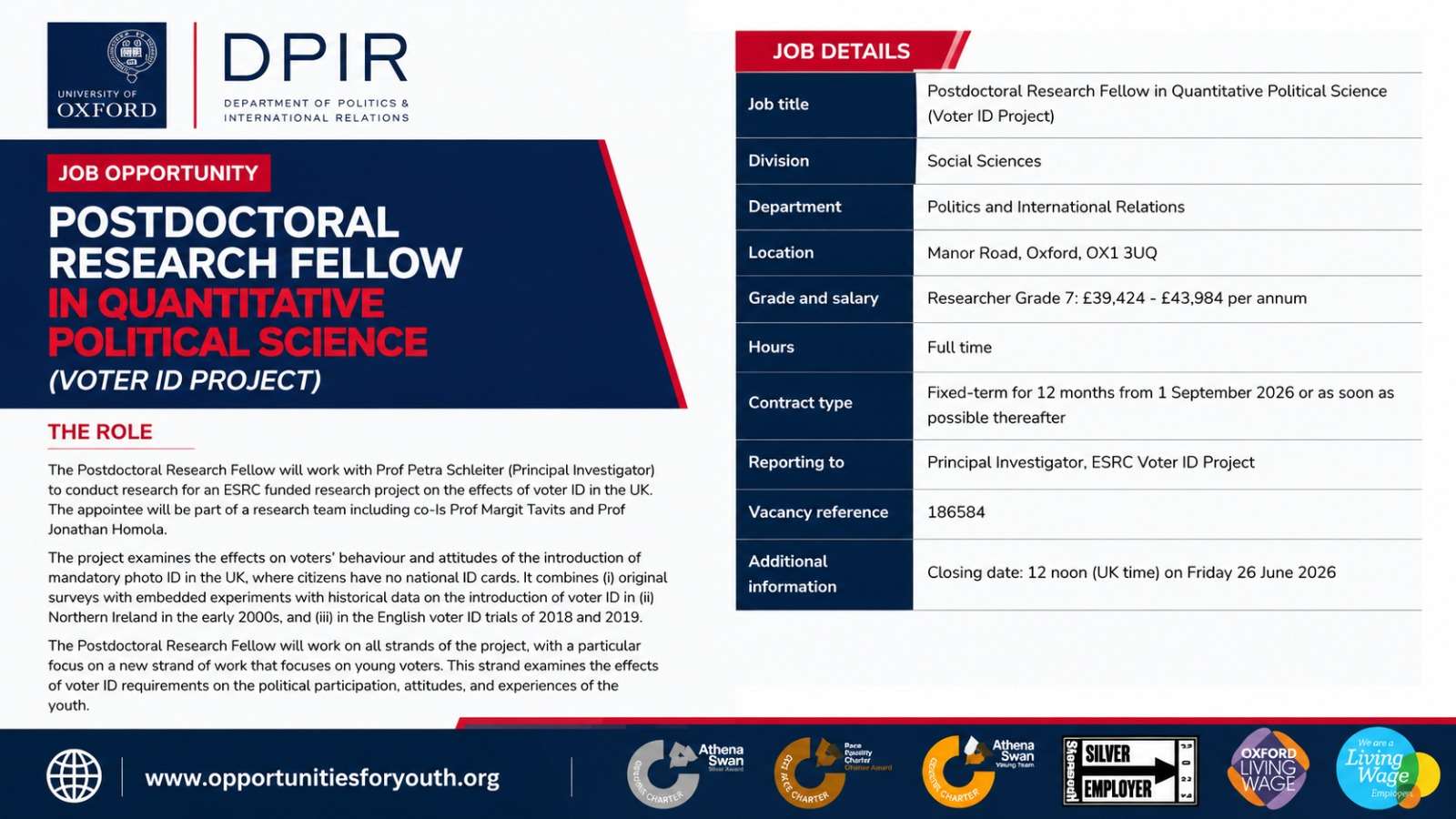
Postdoctoral Research Fellow in Quantitative Political Science at the University of Oxford (Voter ID Project) @the University of Oxford (Voter ID Project)
The University of Oxford invites applications for the prestigious role of Postdoctoral Research Fellow in Quantitative Political Science, contributing to the ESRC‑funded Voter ID Project led by Principal Investigator Prof Petra Schleiter. This full‑time, fixed‑term position offers an exceptional opportunity to join one of the world’s most respected political science research environments and contribute to cutting‑edge work on electoral behaviour, voter identification policies, and democratic participation in the United Kingdom.
This role is based within the Department of Politics and International Relations (DPIR), one of the largest and most influential political science departments globally. The successful candidate will work closely with a distinguished research team, including co‑investigators Prof Margit Tavits and Prof Jonathan Homola, and will engage deeply with experimental survey design, advanced quantitative analysis, and policy‑relevant research dissemination.
Application Deadline: 12 noon (UK time) on Friday, 26 June 2026
About the Voter ID Project
The ESRC‑funded Voter ID Project investigates the effects of introducing mandatory photo identification in the UK—a country without national ID cards. The research integrates multiple data sources and methodologies to understand how voter ID requirements shape political behaviour, attitudes, and participation.
The project includes three major components:
- Original surveys with embedded experiments Designed to measure behavioural and attitudinal responses to voter ID requirements.
- Historical data from Northern Ireland Examining the introduction of voter ID in the early 2000s.
- Data from the English voter ID trials (2018–2019) Providing comparative insights into turnout, postal voting, and demographic impacts.
A new and significant strand of the project focuses on young voters, including those aged 16–17, to understand how voter ID policies influence the youngest cohort of current and future voters.
Key Responsibilities
The Postdoctoral Research Fellow will play a central role across all strands of the project. Responsibilities include:
1. Experimental Research Design and Survey Management
- Contributing to the design of experimental research.
- Coding and testing survey instruments.
- Monitoring data collection and quotas in collaboration with survey firms.
- Conducting data quality checks.
2. Methodological Development
- Adapting existing methodologies and developing new ones tailored to the project’s data.
- Advising team members on methodological and procedural matters.
3. Data Analysis
- Analysing original survey data.
- Working with historical voter ID data from Northern Ireland.
- Examining turnout, postal voting, and related electoral datasets.
4. Dissemination and Policy Engagement
- Presenting findings at conferences.
- Contributing to world‑class publications.
- Preparing policy briefs.
- Supporting engagement with policymakers, including:
- The Electoral Commission
- The Department for Housing, Levelling Up and Communities
- House of Commons Committee Clerks
5. Project Administration
- Assisting with grant applications.
- Organising workshops and conferences.
- Managing personal research activities and workload.
6. Required Training Upon Appointment
New staff must complete training in:
- Information Security and Data Protection
- Implicit Bias
- Bullying and Harassment
- Equality and Diversity
- Harassment in Higher Education
Selection Criteria
Essential Qualifications and Experience
Applicants must demonstrate:
- A completed or near‑completed doctorate in political science or a related field.
- Experience with survey experiments, survey design, and survey data analysis.
- Expertise in advanced quantitative methods and research design.
- Proficiency in R.
- Strong understanding of UK electoral politics.
- Ability to publish in leading political science journals.
- Strong communication and interpersonal skills.
- Commitment to equality, diversity, and inclusion.
- Evidence of good citizenship and willingness to contribute to administrative tasks.
- Ability to critically evaluate recent trends in the field.
Desirable Attributes
- Experience collaborating on research articles for publication.
About the University of Oxford
The University of Oxford is a global leader in research and education, known for its commitment to innovation, academic excellence, and societal impact. Oxford fosters a diverse, inclusive, and supportive environment where scholars thrive and contribute to global knowledge.
The University is:
- A top institution for research excellence.
- A leader in entrepreneurship, producing 15–20 spin‑out companies annually.
- Home to world‑class cultural, academic, and professional resources.
About the Social Sciences Division
Oxford’s Social Sciences Division is a powerhouse of interdisciplinary research, supporting scholars through:
- Research development guidance
- Funding opportunities
- Project design and management support
- Career development resources
About the Department of Politics and International Relations (DPIR)
DPIR is one of the world’s most respected political science departments, ranked #1 in the UK by The Guardian (2024). With around 90 academic staff, the department hosts major research projects, postdoctoral researchers, and a vibrant academic community.
The department is committed to:
- Equality, diversity, and inclusion
- Applying for the Athena Swan Bronze Award
- Supporting staff wellbeing
- Providing a collaborative and dynamic research environment
Benefits of Working at Oxford
Oxford offers an exceptional benefits package, including:
- 38 days of paid holiday
- Generous pension schemes
- Travel discounts
- Professional development opportunities
- Free entry to University museums and gardens
- Discounted access to sports facilities
- Childcare support and family‑friendly policies
- Staff networks for BME, LGBT+, disabled staff, and researchers
- Support for relocation and visa applications
How to Apply
Applications must be submitted through Oxford’s online recruitment portal. Applicants must upload:
- A CV
- A supporting statement addressing each selection criterion
- Details of two referees
All documents must be submitted as PDFs.
Deadline: 12 noon (UK time) on Friday, 26 June 2026
Apply here
For more information about this opportunity visit here
Discover more job opportunities here
Postdoctoral Research Fellow in Quantitative Political Science at the University of Oxford (Voter ID Project)
@the University of Oxford (Voter ID Project)
Location
Global
Work Mode
continent
Posted
about 2 hours ago
Beware of scams! When applying for jobs, you should NEVER have to pay anything. Learn more.
Get jobs in your inbox
Join over 10,000 subscribers receiving our weekly newsletter.
You might also like
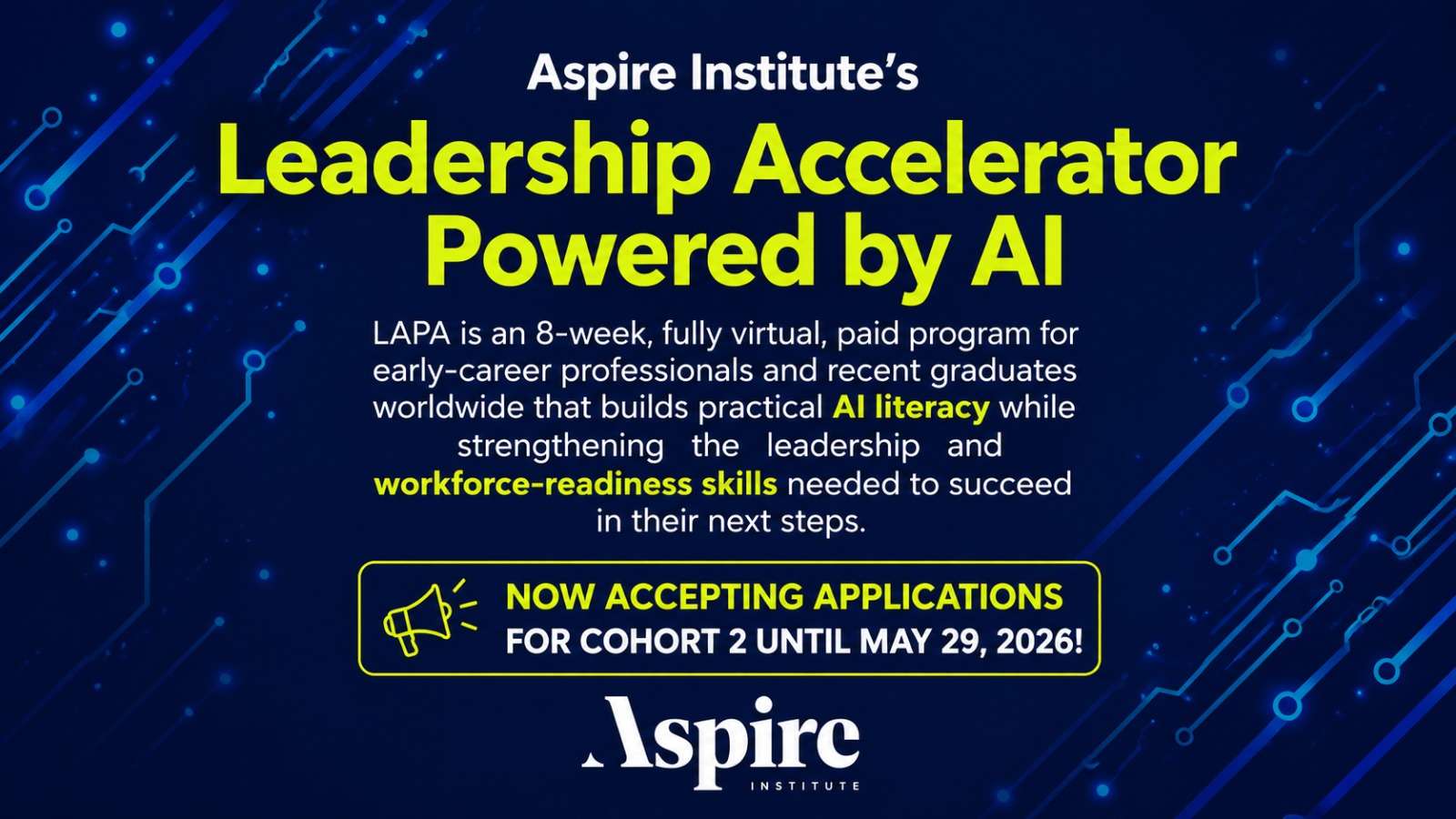
Leadership Accelerator Powered by AI 2026: A Comprehensive 8‑Week Program for Early‑Career Professionals Worldwide
Unknown

Partnership Advisor, Water & Resilience at The Nature Conservancy: A Comprehensive Guide for Global Applicants
The Nature Conservancy: A Comprehensive Guide for Global Applicants

Youth Development Intern
UNICEF

Volunteer Opportunity in Democratic Governance
EU Support to Democratic Governance Programme

AI for Asia Fellow
Unknown

PhD in Economics at Sapienza University of Rome: A Comprehensive Guide for 2026 Applicants
Sapienza University of Rome