
AI Safety Researcher Sahar Abdelnabi Opens 4 PhD and Research Positions in Germany (Fully Funded) @Unknown
Sahar Abdelnabi, a leading researcher in artificial intelligence (AI) safety and alignment, has announced multiple openings for PhD students, predoctoral research interns, and visiting PhD researchers at the ELLIS Institute Tübingen and the Max Planck Institute for Intelligent Systems.
The new opportunities are aimed at researchers interested in advanced AI safety, autonomous agents, alignment, and the societal impacts of artificial intelligence. Abdelnabi currently leads the COMPASS research group — short for Cooperative Machine Intelligence for People-Aligned Safe Systems — which focuses on ensuring that future generations of AI systems remain safe, aligned with human values, and socially beneficial.
Research Group Focuses on AI Safety and Alignment
The COMPASS research group is dedicated to tackling some of the most urgent challenges surrounding advanced artificial intelligence systems and AGI development.
The group’s broader research vision includes:
- Ensuring advanced AI systems align with human and societal values.
- Building safer autonomous AI agents.
- Studying the long-term societal implications of AI technologies.
- Developing evaluation methods for advanced AI capabilities.
- Exploring how AI can positively contribute to science and society.
According to Abdelnabi, the research group aims to combine foundational theoretical work with practical safety solutions that address both present-day and future AI risks.
Groundbreaking Contributions to AI Security Research
Abdelnabi and collaborators have already made significant contributions to the rapidly evolving field of AI safety and security.
Notable achievements include:
- Being the first research team to identify and coin the concept of indirect prompt injection attacks in large language models.
- Proposing watermarking methods for generative AI systems.
- Publishing influential work on AI safety, multi-agent cooperation, and contextual reasoning.
- Winning a Best Paper Award at ACL 2025, where only four papers were selected from more than 3,000 accepted submissions.
The discovery of indirect prompt injection attacks is now considered one of the most important findings in large language model security research, as the vulnerability poses risks for AI systems interacting with external tools, websites, and autonomous workflows.
Multiple Research Opportunities Available
The newly announced openings include several pathways for students and researchers interested in joining the COMPASS group.
Available opportunities include:
- Fully funded PhD positions.
- Predoctoral research internships.
- Visiting PhD researcher positions.
- Collaborative research opportunities through partner programmes.
Applicants holding a Master’s degree may apply directly for PhD positions through the group’s official application channels.
Additional admission pathways include:
- The ELLIS PhD Program.
- The Max Planck ETH Center for Learning Systems.
- The International Max Planck Research School for Intelligent Systems.
Research Areas Span Advanced AI Safety Topics
The COMPASS group welcomes applicants from a wide range of disciplines and encourages interdisciplinary collaboration across computer science, economics, cognitive science, and social sciences.
Key research directions include:
- Context-aware AI agents that respect safety and privacy norms.
- Long-term memory systems for autonomous agents.
- Open-ended and self-evolving AI systems.
- Cooperative multi-agent systems.
- Interpretability and white-box AI control methods.
- Red-teaming and securing real-world AI systems.
- Evaluating emerging AI capabilities.
- Deceptive alignment and situational awareness in AI systems.
- Risks related to gradual loss of control through prolonged AI interactions.
- AI applications for mediation, cooperation, and scientific discovery.
The group also aims to maintain strong collaborations with industry partners and government AI safety institutes to ensure real-world impact and policy relevance.
Passion for AI Safety Valued Over Publication Count
For prospective PhD candidates, Abdelnabi says the group is looking for passionate researchers with strong curiosity and commitment toward impactful AI safety work.
Preferred qualifications include:
- A completed Master’s degree.
- Familiarity with current AI safety research.
- Participation in seminars, conferences, or AI safety programmes.
- Experience through MSc theses, course projects, or research initiatives.
- Interest in interdisciplinary collaboration.
While prior publications are considered beneficial, Abdelnabi emphasized that publication records are not mandatory for selection.
Instead, the group prioritises:
- Curiosity-driven research.
- Motivation to tackle difficult AI safety problems.
- Willingness to learn and collaborate.
- Interest in long-term societal impact.
Tübingen Continues to Grow as an AI Research Hub
The positions are based in Tübingen, Germany, which has rapidly emerged as one of Europe’s leading centres for artificial intelligence research and AI safety studies.
Researchers in the region benefit from:
- Access to globally recognised AI institutions.
- Strong academic collaboration opportunities.
- Connections with industry AI teams.
- An international and interdisciplinary research environment.
Abdelnabi also confirmed that knowledge of the German language is not required for applicants, making the opportunities accessible to international candidates worldwide.
High Interest Expected for Competitive Positions
Due to growing global interest in AI safety and alignment research, the COMPASS group is expected to receive a large number of applications from students and researchers across multiple disciplines.
Abdelnabi noted that while every application and email will be reviewed carefully, response times may vary because of the anticipated application volume.
The new openings highlight the increasing global investment in AI safety research as governments, universities, and technology organisations continue to focus on building more reliable, transparent, and human-aligned artificial intelligence systems.
SEE FULL FORM HERE
For more opportunities such as these please follow us on Facebook, Instagram, Twitter, LinkedIn and WPChannel
Disclaimer: Global South Opportunities (GSO) is not the organization offering this opportunity. For any inquiries, please contact the official organization directly. Please do not send your applications & CVs to GSO, as we are unable to process them. Due to the high volume of emails, we receive daily, we may not be able to respond to all inquiries. Thank you for your understanding
JOIN GSO WHATSAPP CHANNEL NOW

AI Safety Researcher Sahar Abdelnabi Opens 4 PhD and Research Positions in Germany (Fully Funded)
@Unknown
Location
Global
Work Mode
jobs
Posted
about 2 hours ago
Beware of scams! When applying for jobs, you should NEVER have to pay anything. Learn more.
Get jobs in your inbox
Join over 10,000 subscribers receiving our weekly newsletter.
You might also like

Job openings with International IDEA
Unknown

UNICEF are hiring for Programme Associate
Unknown

TA CONNECT IS HIRING – MULTIPLE ROLES AVAILABLE
MULTIPLE ROLES AVAILABLE
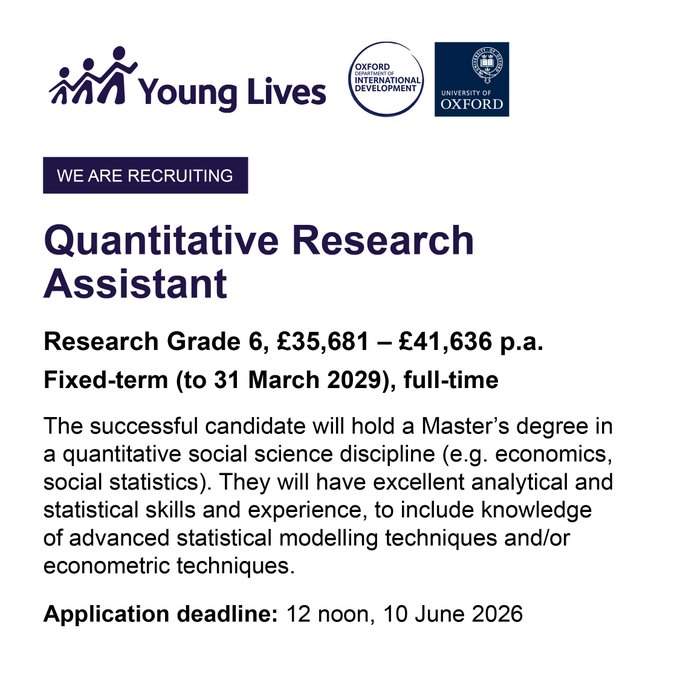
University of Oxford Seeks a Quantitative Research Assistant Position with Young Lives Research Team – Apply by June 10 2026
Unknown

UN Women Seeks a Home-Based Programme Specialist in Women, Peace, Security and Humanitarian Action – Apply by 8 June 2026
Based Programme Specialist in Women, Peace, Security and Humanitarian Action – Apply by 8 June 2026

WWF Blue Heart of Africa Seeks Expert Consultancy to Develop Africa Water Resilience Fund (AWRF) Architecture & Governance – Apply by June 5, 2026
Apply by June 5, 2026